

The Top 3 Mistakes Founders Make When Signing a Commercial Lease
(And How Wellness & Fitness Studios Can Avoid Them)
Opening the doors to your own wellness clinic, fitness studio, or beauty salon is an exciting milestone. You’ve spent months (maybe even years) perfecting your business plan, building your brand, and searching for the perfect space to call home.
Then you finally find "the one" and the property owner sends over a dense, lengthy, and filled-with legalese commercial lease. For many founders, the excitement can quickly turn into overwhelm.
When you rent a home across Canada, there are laws that give tenants built-in protections from things like rent increases or eviction, and there are tenant boards you can go to for disputes. Commercial leases (offices, retail spaces, warehouses, etc.) don't work that way. Those consumer-style protections mostly don't apply to businesses. Instead, whatever you and the property owner agree to in the lease itself is what really counts.
That's why people often say "contract is king" for commercial deals because courts will mostly hold you to what you signed, even if it turns out to be a bad deal for one side.
If you’re about to secure commercial space for your business or are thinking about doing so soon, consider the following three common mistakes that many founders make.
Mistake #1: Signing the Lease "As-Is" (Without Negotiating)
Many founders are so thrilled to have their application or offer to lease a space accepted that they view the lease as a take-it-or-leave-it document. They feel grateful the property owner chose them, they're eager to start, and they sign on the lease agreement without asking for a single change.
Here is a reframe: A commercial lease draft is simply the property owner’s ultimate wish list. It is designed to protect their asset, not your cash flow. In many cases, lease terms are negotiable, and the property owner will be most motivated to agree to changes before you sign.
What this looks like for Wellness & Fitness:
The Permitted Use Clause: If you run a multidisciplinary wellness clinic, you need a broad "Permitted Use" clause. If your lease strictly limits your use to "physiotherapy clinic," and two years from now you want to bring in a registered massage therapist (RMT) or an acupuncturist to help pay the rent, you might be in breach of your lease.
Tenant Improvement (TI) Allowance: Outfitting a boutique fitness studio with specialized flooring or building out private treatment rooms with soundproofing and plumbing is expensive. Property owners will often agree to a TI allowance (cash or rent-free periods to help cover these construction costs) if you ask and negotiate for it upfront.
Founder Takeaway: Avoid signing the first draft, if you’re unsure what you should negotiate, work with a lawyer toidentify clauses that limit your operational flexibility or expose you to liabilities.
Mistake #2: Thinking a Shorter Lease is Always Safer
It is entirely natural to feel hesitant about committing to a long-term lease. You might think, "I’ll just sign a short 1-year lease to test the waters."
However, in the commercial world, a short lease without guaranteed security can actually be highly risky, especially for wellness, beauty, health and fitness brands.
If your studio or clinic is wildly successful, you will build a loyal, local community. But if your 1-year lease expires and you don’t have a legally binding option to renew, you have far less leverage to negotiate a lease extension than if you had negotiated one upfront. The property owner can increase your rent to match market rates, sell the space, or lease the space to a competitor, forcing you to relocate and rebuild your community from scratch.
What this looks like for Wellness & Fitness:
The Buildout Loss: Imagine spending $80,000 to install specialized lighting, offices, furnishings, and equipment only to be forced out after 12 months because your lease ended and you had no right to stay. You cannot easily pack up your lighting or other leasehold improvements and take them with you.
The Power of the "5 + 5" Structure: Instead of a short lease, aim for a five-year initial term with a 5-year option to renew. This gives you the security of a 10-year runway if things go well, but only commits you to five years initially. If five years sounds scary, a 3 + 3 +3 can also give you security of tenancy for nine years, where you get to decide near the end of each term if you chose to extend the lease.
Mistake #3: Only Looking at the "Base Rent" (The Triple Net Trap)
Commercial properties are almost always advertised by their Base Rent (e.g., $32.00 per square foot). Many founders calculate their budget using this number alone.
But in a standard commercial lease, Base Rent is only half the story. You will almost certainly be signing a Triple Net (NNN) Lease, which means you are also responsible for your proportionate share of the building's operating costs.
These additional costs, often called Additional Rent or TMI (Taxes, Maintenance, and Insurance), include:
Property taxes
Building insurance
Common Area Maintenance (CAM) charges (lobby cleaning, snow removal, landscaping)
Utilities and garbage disposal
Structural repairs and maintenance
What this can look like for Wellness & Fitness:
Let's look at how the math actually works out for a typical suburban clinic space:
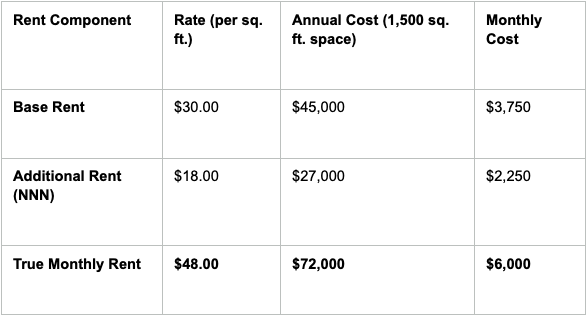
Without factoring in the Additional Rent, a business owner would face a $2,250 monthly budget shortfall they didn't see coming.
Critical Considerations for Wellness & Fitness Founders
Before you signing lease, keep these sector-specific realities top of mind:
The HVAC Battle: Fitness studios and busy clinics put strain on heating, ventilation, and air conditioning systems. Many standard leases state that the tenant is responsible for maintaining, repairing, and replacing the HVAC. A surprise $15,000 AC replacement bill can completely sink a small studio's cash flow.
Demolition & Redevelopment Clauses: In growing transit hubs (for British Columbia businesses think areas like Burnaby, Coquitlam, or Vancouver), older strip malls and commercial plazas are constantly being redeveloped. Look out for "Demolition Clauses" that allow the property owner to terminate your lease if they decide to rebuild or sell to a developer. If you just spent $100k or 200k on a beautiful buildout, a demolition clause can be financially devastating.
Protect the Space You’re Building
Your physical space is the heart of your service business. It is where your clients heal, sweat, relax, and connect. A commercial lease is one of the largest financial and legal commitments you will ever make as a founder, treat it with the care it deserves.
If you are currently looking at an Offer to Lease, or have been sent a lease agreement by a property owner, this is agreat time to seek legal support from a qualified professional.
I help wellness, health, and fitness founders across Canada review and negotiate commercial leases so they can protect their investments, secure their locations, and sign with confidence.
Let's make sure your lease works for you, not against you. Schedule you call today.
-
Mari Gutierrez is the founder of Encino Law, a BC-based business law firm helping entrepreneurs build the legal foundation to grow with confidence.
Disclaimer: This article is provided for educational and informational purposes only and does not constitute legal advice. If you require legal advice for your specific situation, please consult a qualified lawyer.
